Attending to the Beautiful Mess of the World

When the fifth and sixth graders from the McKenzie River Christian School arrive at forest headquarters, each kid wears a name tag made from a slice of wood that looks like a sugar cookie. The cookies hang around their necks, announcing the camp names they have chosen for the field trip: Fang, Dark Dragon, Caos, Monkey Girl, Money Maker. They show little interest in the weather station that measures temperature, wind, chemistry of rain, weight of snow, the sensors downloading data every hour. They perk up at the sight of a stainless steep mercury collector, the tank sporting robotic arms that slide its cover into place to protect a rain sample. They don’t seem to hear the weatherman’s words as I copy them down in my field notebook. “Rain in Ohio comes down strong as vinegar and eats paint.” “Some of the best rain in America comes down right here in Oregon.” The kids shuffle, uninterested in the meteorologist’s homily.
Asked if they ever have seen an old-growth forest, the children look blankly at their guide. These children live in the shade of five-hundred-year-old Douglas firs. How can it be that they do not recognize these giant beings that live in their neighborhood, that have stood here, tough and serene, since before science discovered its method?
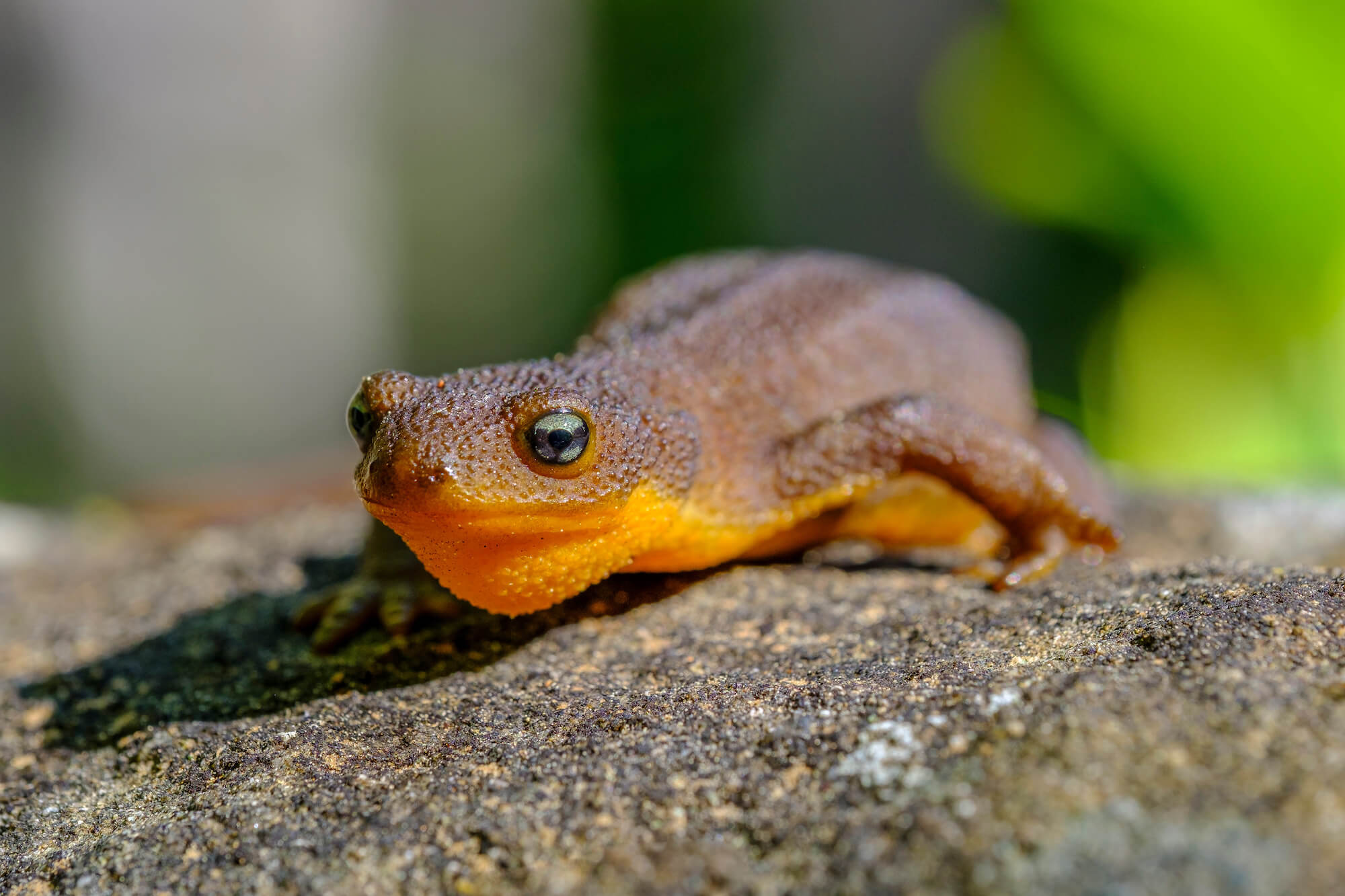
Freed from the entrapment of an adult lecture, the kids tumble like puppies down the forest lane. When one spots the rough-skinned newt sauntering on wet asphalt, they all freeze, stare, and go silent, magnetized by the oddness of its orange belly, brown back, and translucent handlike appendages. They especially love hearing that the newt is poisonous, that after handling it they must all wash their hands. They love the danger., the taming power of the small. It sets loose a featherweight bout of animal stories.
“That’s nothing. You should see the Pacific giants!” says Fang, gesturing wider than his torso to demonstrate their impressive size. He recounts how the salamanders, black and vicious, swaggered up when he and his father went fishing, how they grabbed the fish guts, trashing theirs all around like monsters to consume the slime.
“Yeah? Well, I’ve seen lamprey eels that swam up the McKenzie all the way into Lookout Creek!” brags Caos. He points to the rivulet tumbling past the parking lot.
The newt has brought them back from their boredom into what Walt Whitman called the “costless, divine, original concrete.”
Continue reading “Attending to the Beautiful Mess of the World” in The Way of Natural History.