Connecting the Dots

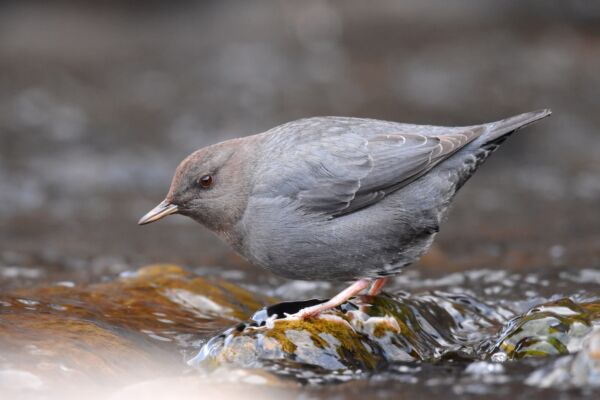
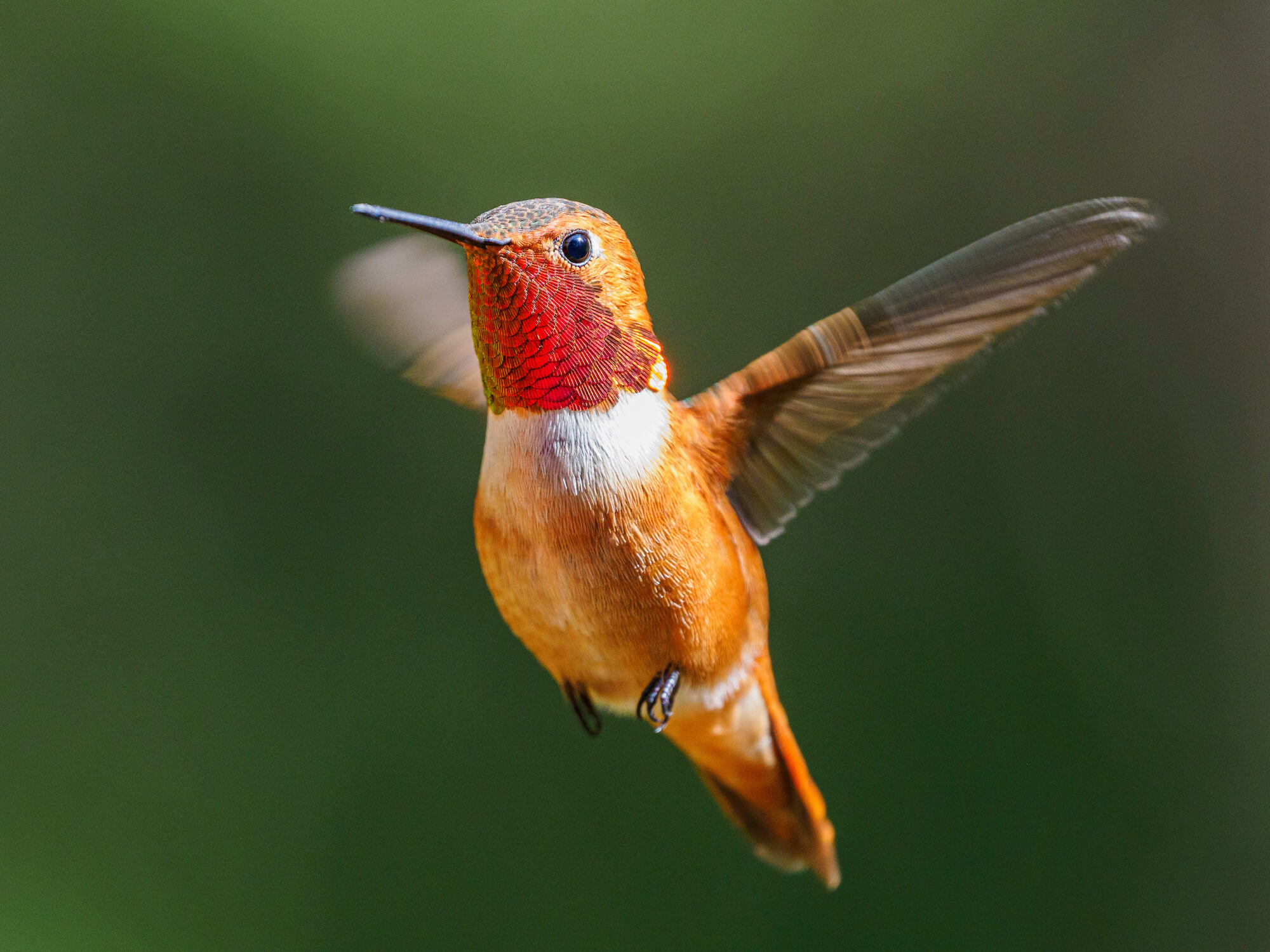
The rofous hummingbird is no larger than a spool of thread. The mass of the average adult equals that of one and a half pennies. Females are bigger than males, and both eat three times their body weight most days to stay alive. Despite their size, these tiny rust-throated birds travel five thousand miles each year between their wintering grounds in Mexico and the Gulf Coast and their breeding grounds in the center of the Pacific Northwest. Measured in body lengths, their migration is the longest in the world. The oldest begin the journey in late January. The youngest follow shortly thereafter.
When I show up at the H. J. Andrews Experimental Forest in late May the rufous have already arrived, plunging their feathery tongues deep into the first alpine wildflowers. I too have traveled far to get to these fifteen thousand acres, nestled in the luxurious folds of Oregon’s Central Cascades. But unlike the hummingbirds’, my journey wasn’t nectar fueled. I watched two movies and ate a ham sandwich while my Boeing 737 burned through thousands of gallons of jet fuel. I do, however, walk the final twenty feet to a cabin in the woods on my own. This will be my home for the next two weeks while I serve as the forest’s writer-in-residence.
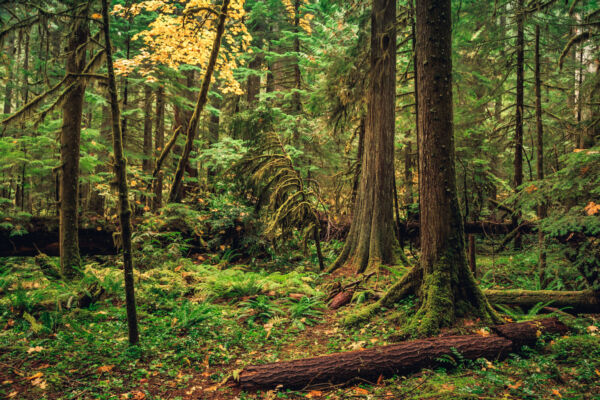
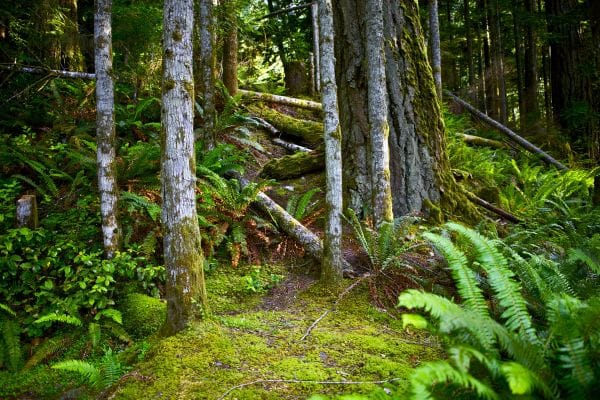
On my third morning, it is a little after eight o’clock and I am outside; the clicking of red tree voles high up in the surrounding old growth rinses my mind clean. I have been awake and writing since before dawn, and I needed a break. I needed to feel the last of the morning mist latch on to my hair. I needed to stare dumbly at the deep rivulets and landscapes in miniature running up the trunks of the nearby Douglas fir trees, which have been thriving in this little grove for well over four hundred years. This easy proximity to a sliver of the natural world that resonates on a time scale so utterly different from my own: that is why I am here. I am hoping these weeks awaken something in me, something in the language that I use to describe events so large they resist my pinning them into the pages of this book.
I walk past the research scientists’ bunkhouses. They are low slung and the color of mud. Hand-carved wooden signs hang above the entryways, labeling the buildings with names linked to local geographic features and species. First I pass Quartz Creek, then the Rainbow Building, named after the beloved endemic trout. When I reach the balcony of Roswell Ridge, where the bird crew sleeps, I stop. Someone has lined the railing with hummingbird feeders. There I spot my first rufous: pouring its slender beak into a glass spigot, sucking up the syrup below.
If these slight birds spun out silk as spiders do, each one would run through 8,849 spools a year in its migrations. When the rufous flies away, I imagine a single iridescent string trailing behind its feathered body. And then I imagine the many thousands of others in the Andrews just like it. If the continent is a quilt, then these hummingbirds—so much smaller than my own hands—place the stitches that hold the fabric together. I squint and try to distinguish one wingbeat from the next as another rufous approaches. What extraordinary creatures, I think, weaving here and there—mountains and lowlands—together with their windblown little bodies.
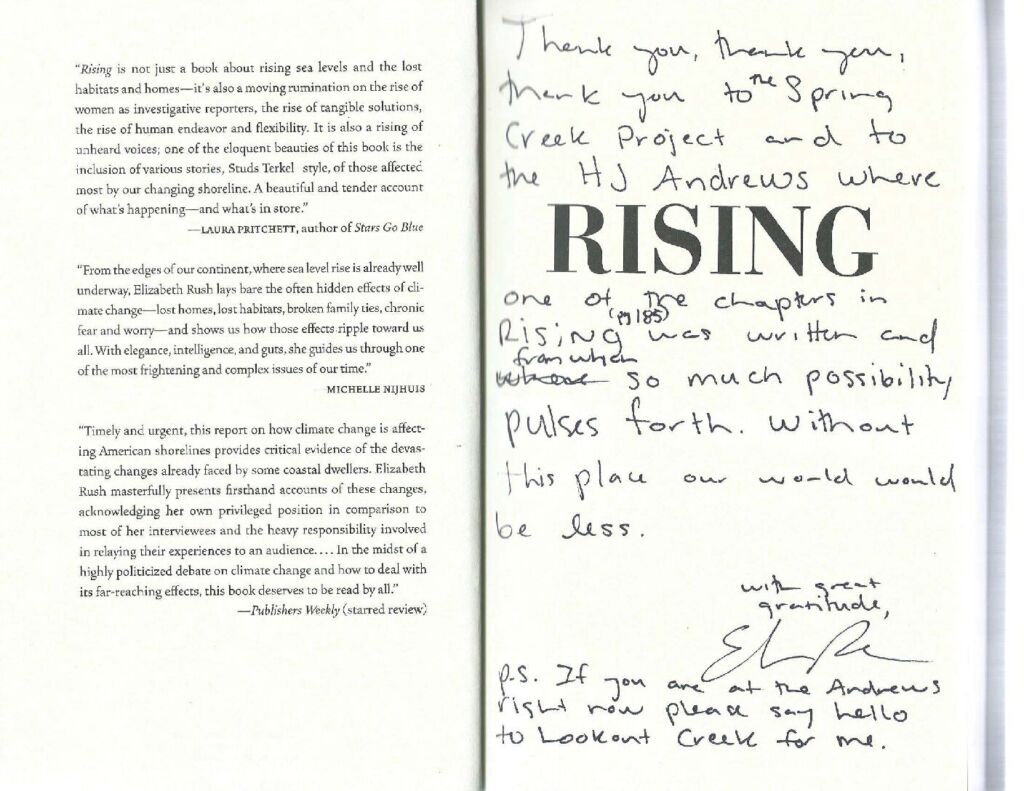
Continue reading Rush’s “Connecting the Dots,” from her book Rising: Dispatches from the New American Shore.