A Cathedral Not Made by Hands
In Laudato si’, Pope Francis offers a vision of moral responsibility rooted in awareness of the world around us. He points to St. Francis, who “looked with love” on all creatures, as a model. He writes of an “attitude of the heart, one which approaches life with serene attentiveness, which is capable of being fully present” to everyone and everything. And he also calls for an “intense dialogue” between religion and science, which has its own “gaze.” The H. J. Andrews Experimental Forest in Oregon, one of the world’s most studied ecosystems, offers an especially rich opportunity for such dialogue. Here scientists have cultivated their own gaze of “serene attentiveness.” What can theology learn by looking with scientists at such a complex ecosystem?
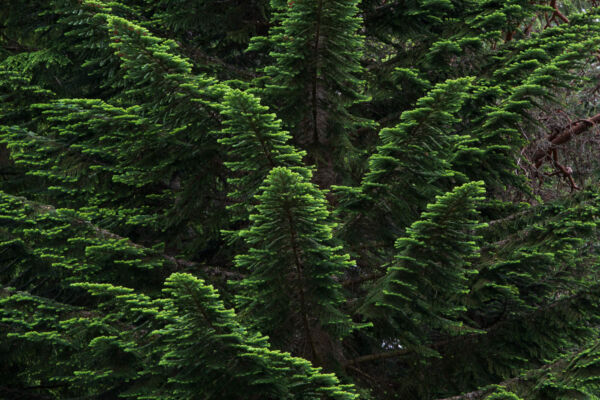
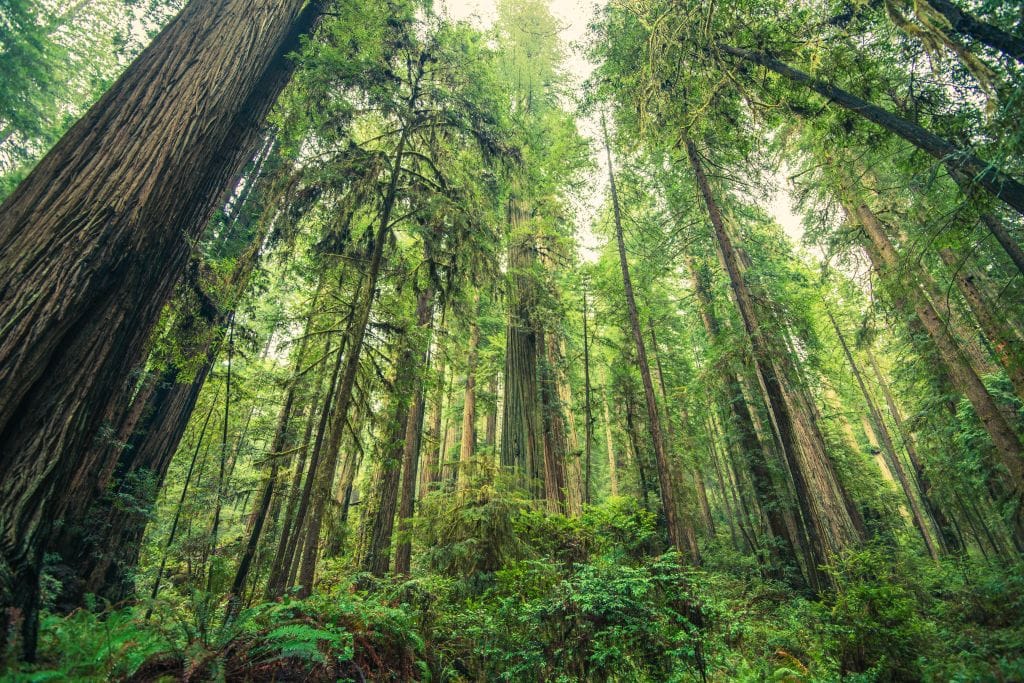
Entering an old-growth forest can be overwhelming. The sheer, tangled abundance of life is shocking. If John Muir was right to describe these as “cathedrals,” they are messy and riotous ones. Massive trees, centuries old, rise from heaps of moss and ferns and disappear into the canopy above. Life overlaps everywhere, leaving no surface bare. Some trees are so covered with moss, lichen, or fungus that it’s difficult to see their bark or even needles. Curtains of damp moss hush sound. The scent of conifers and the earthy must of soil fill the air. Underfoot, the ground is soft and deep. There are so many layers, in every shade of green, that it is difficult to take it all in. There are hints at a timescale beyond human reckoning. Moss grows very slowly; yet here it covers just about everything. A tree bends toward an opening in the canopy that filled it centuries ago.
Encountering this riot of life can be like walking into a loud party full of many conversations (and more than a few fights), or arriving in the middle of the harmonies and dissonance of a complex symphony. It is tempting to focus on just one thing, to simplify. I reach out to touch an ancient Douglas fir, instinctively choosing a bare patch of bark stripped of moss. But the tree is far more than a single being. It hosts hundreds of plants and animals and depends on countless ecological interactions. Thinking like an individual, I miss the relationships. Ecology, like community, requires a gaze attentive to connection.
Continue reading “A Cathedral Not Made by Hands” in Commonweal magazine.