Looking for Solace in the Natural World
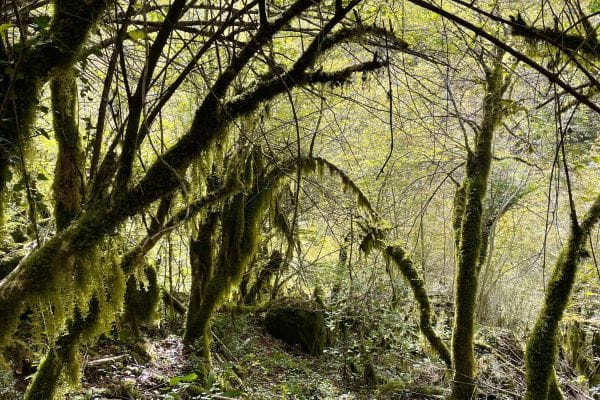
I’ve never gone to church, unless it was for a wedding, a memorial service, or to see the inside of a spectacularly beautiful and inspiring building. And I am pretty sure I never will. I have always been a little uncomfortable with the idea that nature is my church, but here I decide it is probably pretty close to the truth. I find comfort and peace in places belonging mostly to other creatures, places dominated by nonhuman forces, places like this forest. I am recovered here, made whole. Being here gives me a sense of grounding, a feeling that the world is as it should be. I do not know what it is like to actually believe the teachings of an organized religion. But when I get out here or to anyplace that has the unmitigated power that the Andrews does, I feel one with the world. This is my spiritual practice. Saying this explicitly feels strange: I think of myself as a scientist as well as a writer, and I have little identification with spirituality.
Being here, though, I can feel the vitality, resilience, and aliveness of nature. I don’t care right now about eloquent arguments about “the death of Nature” or the data showing that we have added so much greenhouse gas to the atmosphere that every living thing will be affected and many unique life forms will likely face extinction. Life in the forest is beautiful, and it is thriving. As much as the future is uncertain, being here feels beyond these worries.
At first, the pleasure and solace I feel here makes me wonder about the people who work here. A whole cadre of researchers, field assistants, and staff work and sometimes live at the HJ Andrews. But then I remember what I knew when I worked as a biologist and did fieldwork: the daily grind of research, even in a beautiful place, gets in the way of loving the land unguardedly. Perhaps some of the scientists here find satisfaction in their connection with the natural world. But my experience suggests many of them don’t experience this connection any more often than I do. The key, at least for me, is to come back outside often, to places not dominated by humans. What I realize is that every visit to a place like this, every hike into wilderness or camping trip to a special place is nourishment for living well in our times. It’s so easy to forget this in the trenches of daily life.
There is another element contributing to being restored by the natural world. Other species have no grocery stores or central heating to fall back on. I realize here how many of my best moments occur when I’m doing without these protections. When I must work to meet my most basic needs—eating, staying warm, finding shelter—I feel most at one with the world. It reminds me of something Joseph Campbell said in an interview: “I don’t believe people are looking for the meaning of life as much as they are looking for the experience of being alive.” When I’m outside needing to fend for myself in some fundamental way, I am most likely to experience being alive in this way.
Continue reading Wise’s “Looking for Solace in the Natural World.”