Environmental Writing and the Ecology of Hope

1. Bud Break
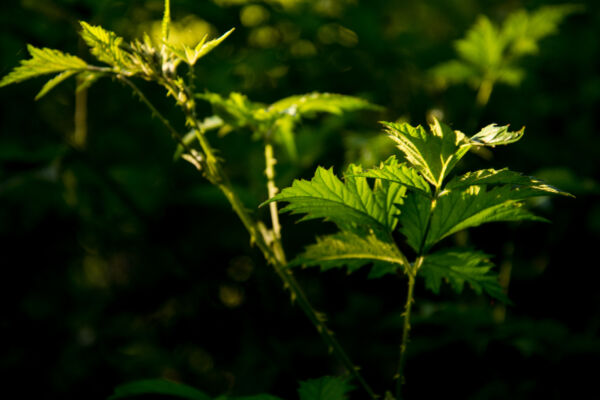
Early May at the HJ Andrews Experimental Forest, near Blue River, Oregon, and after a long, snowy winter, spring is bursting. Everywhere I look vivid green buds are unfurling on shrubs and trees (even the conifers), the forest reawakening in what phenologists who study plant and animal life cycles call “bud break.” Hosted by the USDA Forest Service, I’m here to write about this iconic old-growth forest landscape and its ecological responses to climate change. Established in 1948, the Andrews Forest is a National Science Foundation (NSF) Long-Term Ecological Research (LTER) site. In 1981, NSF created a network of twenty-six such stations to conduct multidisciplinary research on ecological issues that span decades and cover large geographic areas.
I’ve been here before to work on a book chapter on old-growth forest food webs and participate in the Blue River Writers gatherings sponsored by the Spring Creek Project. Under the auspices of the Oregon State University (OSU), the Spring Creek Project convenes scientists, philosophers, and creative writers to find inspiring new ways to understand and re-imagine our relationship with nature.
This time I’m staying in a new building, the GREEN House, which nestles into the forest on the edge of headquarters. NSF supported construction of this beautiful two-story, energy-efficient dwelling, GREEN standing for Green Research and Education for Ecological Networks. It provides a home for forest director Mark Schulze and visiting scientists, writers, and educators. Everything about the house is designed to minimize its carbon footprint, from the concrete floors in my apartment to the large, south-facing windows that let in the sunlight filtering through the forest canopy, to kitchen countertops and furnishings made of gnarled-down trees from the forest. Imbedded sensors monitor the house’s energy use, air quality, and carbon footprint, collecting data every fifteen minutes and displaying it online.
The Andrews Forest covers the 16,000-acre Lookout Creek drainage in the Oregon Cascade Range. This ecologically diverse forest ranges in elevation from 1,350 to 5,340 feet. It contains Douglas fir (Pseudotsuga menziesii), western hemlock (Tsuga heterophylla), and western redcedar (Thuja plicata) forest stands at lower elevations and noble fir (Abies procera), Pacific silver fir (Abies amabilis), Douglas fir, and western hemlock up higher. Managers have set aside old-growth (stands that contain trees 500 years old and greater) on 40 percent of the Andrews. Timber harvest, which began in the 1950s, has created young plantation forests on another 30 percent of this landscape. This rainforest gets approximately 100 inches of rainfall per year, mostly between October and May. The conifers have adapted to this annual rain cycle, their needles enabling them to retain more moisture during warm, dry months.
Since the 1950s, ecologists have collaborated here on pioneering science to learn about forests at a watershed scale. Today, under the direction of principal investigator Michael Nelson, long-term research examines things such as air flow through steep stream drainages, carbon sequestration, disturbance regimes ( like fire and floods), channel geomorphology, climate change, and phenology. Researchers have identified eight small, paired watersheds, in which they’ve established a network of permanent plots containing hundreds of sensors. This forest is wired, literally, with sensor data streamed online and freely accessible to the public. However, such technology doesn’t diminish the power of this place due to its enormous trees and untamable geomorphology – like the prodigious debris flows that occasionally come roaring downslope, bearing minivan-sized boulders and rearranging the topography in a matter of seconds.
Continue reading Eisenberg’s “Environmental Writing and the Ecology of Hope.”