The Mountain Lion
Overture
Overture: An act, offer, or proposal that indicates readiness to undertake a course of action or to open a relationship. – American Heritage Dictionary
Each September 28th for the past eight years, I have embarked on a reading of Peter Matthiessen’s classic The Snow Leopard. I work my way through his daily entries on the same date he wrote them in 1973 until, on December 1st, the chronicle of his remarkable journey across the Himalayas and into himself, comes to an end. What I find particularly moving about the book, beyond the beautiful language, profound insights and stunning natural and cultural setting, is the mode of mobility that frames Matthiessen’s experience. It all takes place afoot, which gives the text a rare continuity.
What if Matthiessen (henceforth PM) had driven or flown from Pokhara to the Crystal Monastery and back? No doubt, his journey and resultant book would have been completely different.
This awareness helped inspire my Long Term Ecological Reflections residency. Unlike the other residency recipients to date, I have a relatively long-term (fifteen-year) and multi-faceted relationship with the Andrews Forest. Yet, until last summer, I had always ridden in automobiles to access my various destinations — headquarters, owl sites, vegetation plots, trailheads etc. Then, while walking long stretches of the H.J.A.’s main roads looking for an invasive grass species — false brome — I glimpsed what I had been missing: the details in between destinations and the resultant sense of continuity akin to that found in The Snow Leopard. “It’s the unpredictable incidents between official events that add up to a life . . .” writes Rebecca Solnit, in her book Wanderlust: A History of Walking. Destinations might be thought of as those official events. And to encounter the unpredictable incidents that add up to a life means filling in the gaps — making the journey itself the destination. Only on foot, does that seem fully possible.
I envisioned my residency as a microcosm of PM’s trek — a week of journal entries instead of two months resulting in an essay instead of a book set in the Cascades instead of the Himalayas. I began the journey at my house in McKenzie Bridge on the same date PM began his journey thirty-six years ago.
Given that the Long Term Ecological Reflections program is intended to continue until 2203, and given that the fossil-fuel driven life will almost certainly become unviable and unavailable well before that time, a foot-rate reacquaintance with the landscape seems in order. It also seems to serve what I see as the broadest mission of the LTER program: gaining “insight into how we ought to live our lives.”
What is changeless and immortal is not individual body-mind but, rather, that Mind which is shared with all existence, that stillness, that incipience which never ceases because it never becomes but simply IS. – Peter Matthiessen, The Snow Leopard
September 28
The day begins like most other weekdays; I stand with my almost-eight year old son, Galen, at the end of our driveway in pale dawn light awaiting the arrival of the school bus. Galen seems unperturbed that I will be gone a week, though he says he’ll miss me. I’ll miss him too, I reply. He’s cheerful as he boards the bus and we wave until he’s out of sight.
This is how I’d hoped it would go. No dramatic breaks in routine, just a gradual veering from the norm onto a different path. Even so, a heaviness settles in my heart when the busses’ taillights disappear from view. This will be the longest I’ve been away from Galen since he was born. I will miss him. I focus on the stories we will have to share with each other once I’m back and set to work on final trip preparations.
By mid-morning, I am ready. I stow the last of my food in my internal frame backpack and heave it on. It feels heavier than usual, but I don’t weigh it. Some things aren’t worth knowing. The added poundage derives from a full set of waxed cotton rain gear and extra thermal underwear I carry in anticipation of the cold wet front forecast to arrive tomorrow. Today, the west side forest of the central Oregon Cascades is cool, breezy and overcast, but dry. The feel of autumn is heavy in the air.
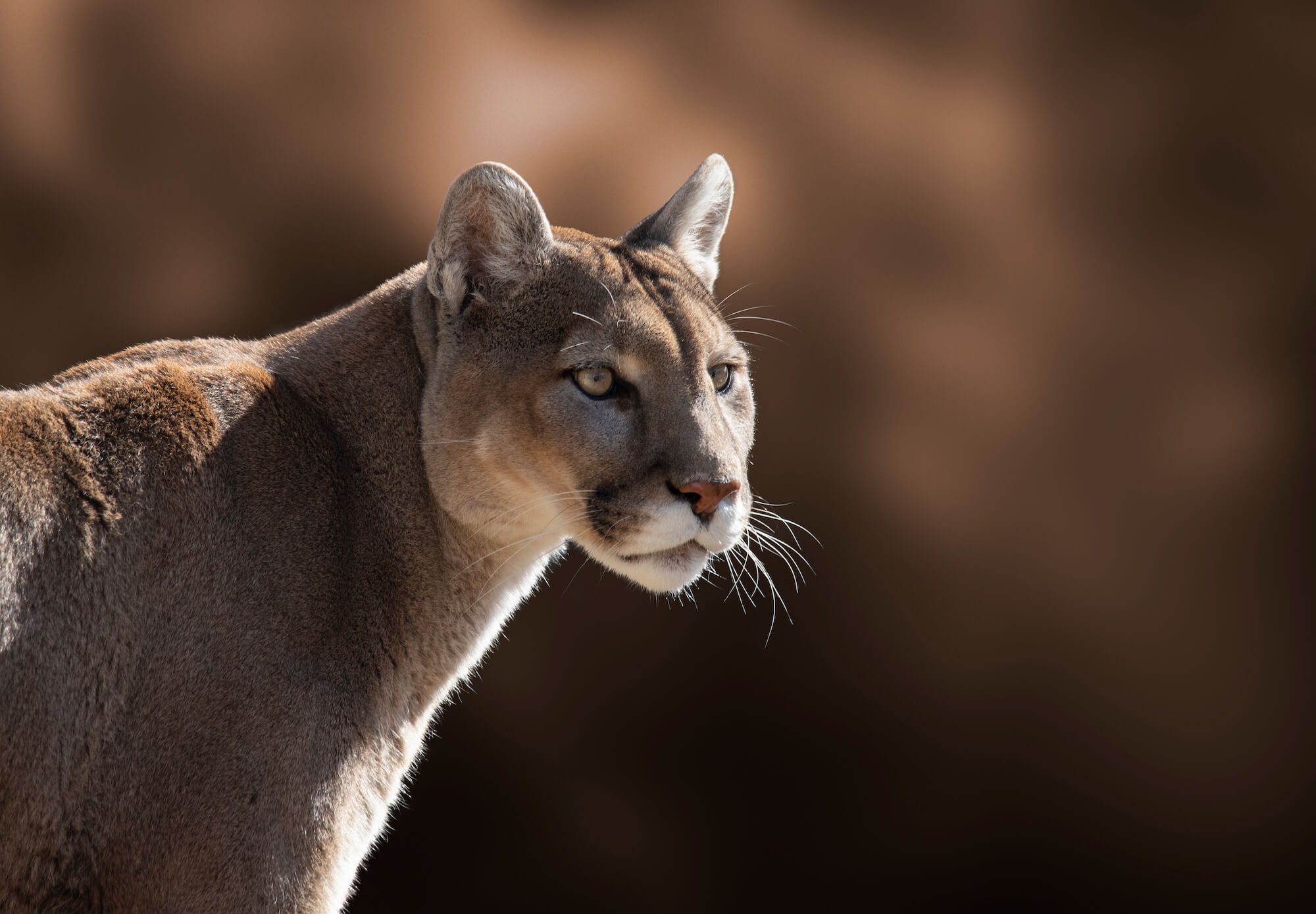
I shoulder my camera bag, flip up the back of my wool crusher hat so it doesn’t brush my pack and heft my hiking stave, a stout, straight, five-foot long beaver-chewed limb I plucked from Horse Creek a few years ago. I’ve named it Matthiessen and carry it for support on uneven ground, as an aid crossing creeks and for protection from bears as well as a being that elicits an even more visceral reaction — the mountain lion.
The North American mountain lion (Felis concolor), also called the cougar or puma, is the Cascadian equivalent of the Himalayan snow leopard. Its lurks in the land as it lurks in the background of the mind, in the deep places where the perils of the Pleistocene are still etched in the human psyche. I carry the stave to comfort that psyche and to counter the vulnerability of my solitude; a condition that likely registers as potential opportunity in the mind of a predatory cat whose own Pleistocene psyche expects humans to come in groups.
Continue reading “The Mountain Lion.”