Tree Math

Predawn,
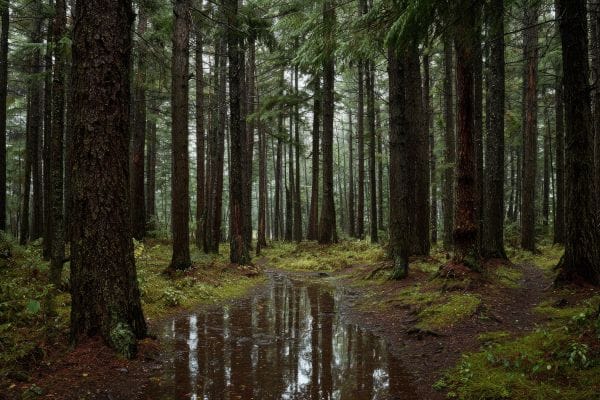
the time when it’s light enough to see forms of trees,
and I’m doing math.
Let’s see: 600 years-old x 365 days = 219,000.
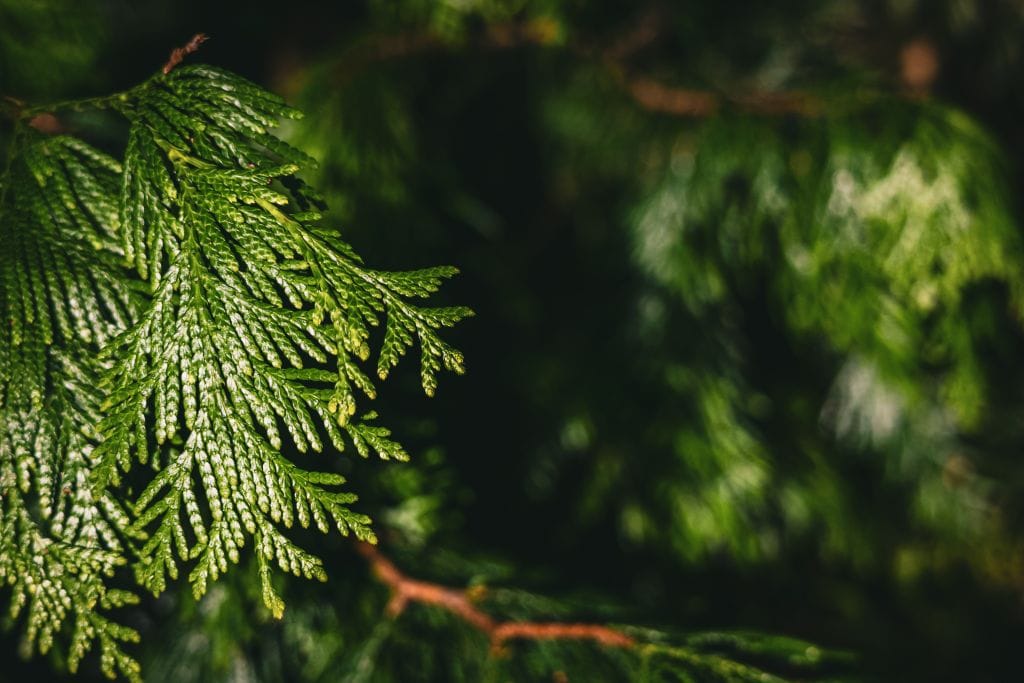
That’s 219,000 chances for a western red cedar
to feel the dark surrender to the light.
Not far south, coastal redwoods get 730,000 such resurrections
(for left brainers: 2,000 x 365)
though for cedars and redwoods,
the glory of sunrise is often little more than the subtlety
between black rainfog and gray rainfog,
a study perfect for charcoal artists.
I’m also thinking about the math of plumbing:
250 feet into the mist for the cedar,
360 feet lost in the fog for the terminal bud of the redwood.
Each requires discourse and trade far below
with roots and mycelium,
all translating dirt, wind, and light,
feats so slowly performed in their tent show of abracadabras
that we miss them no matter our mindfulness.
The plumbing, though, that’s the final arbiter,
the crucial architectural design required to pump sap to the tip top,
which,
and you’re welcome to try this by hand in your own home,
is hard to do with no mechanical parts and no fossil fuels.
It’s more than plumbing though.
The ghostly white mycelium,
the threadlike roots of fungi,
snake everywhere,
casting a net through the soil
seining for water and nutrients,
connecting this tree to that tree
to that tree to that tree
everyone holding hands in a vast underground internet of tree talk,
trading goods and services without Dow or Jones complicating things.
Meanwhile, at the top of the tree, wind flows by for centuries
carrying dust and seeds and leaves that eventually collect in the branches,
growing forest gardens
of huckleberries, elderberries, gooseberries, ferns.
Why are we here? What is asked of us? How do we reciprocate?
Perhaps it is as simple as putting our faith in loving
this most inconceivable place
in walking in everyone’s shoes – fungi, lichens, mosses, soil, fog, light –
and letting that wandering love guide us
to the top of a tree
into the fungal mats
into the light and mist.