Juxtaposition

Naturalists by occupation, or preoccupation, identify things. And when they are uncertain as to what something is they know the importance of seeing how it is. Visual artists are not usually concerned with this naming of things, but they are also intent on understanding how a thing appears. Modern culture has developed a strong penchant for specialization and both the fields of natural science and the visual arts have their separate languages in which to converse. Ordinarily, this makes it more difficult to use each other’s tools, but in the translation of terms dealing with the process of observation, of seeing, these two disciplines can, in fact, understand each other perfectly. Naturalists might not speak of juxtaposition but they understand in a moment that the examining of one thing in relation to another is a concept they use everyday. The artist might not choose to frame a description in ovates and imbricates but the conveyance of these bits of information provide important visual concepts that enable them to bring a certain understanding to their work. To translate what they see, they need to visually comprehend its form.
Walking side by side in the deep woods, across the hot waver of a desert or down the length of a windy shore, the artist and naturalist notice things differently but the awareness of each to their surroundings is grounded in a similar sense—the art in, and of, observation. I have learned from spending an inordinate amount of time with both these types of observers that the naturalist and the artist share a way of seeing the world. Both use contrast, scale, shape, color and texture as tools of comparison, as meters of understanding. The use of juxtaposition makes us think, not only about what we see, but what we know about what we see.
This dynamic of visual comparison enhances memory and appreciation for the naturalist and for the artist inhabits photographs, paintings, poems, any place where the visual elements seep together; form and reform into thought. And it is here, in this shared and heightened sense of noticing that an exchange of information can be invaluable, that the artist’s way of seeing and the naturalist’s perception of things can enhance one for the other. The place to which the artist and the naturalist takes this visual information may be different, but the process, how we teach ourselves to see, is much the same.
As children, we are taught through memorization and association and we are not given much in the way of perceptual skills. So when we are presented with the word tree to describe say, 625 North American species of woody perennial plants, we generally leave it at that and move on to other things. The sky, we are taught, is blue and even though on any given day that sky can surround us in a hundred blends and rifts of reds and blues and grays, the singular description, sky blue, satisfies us. We do not question the vagueness of these words until something causes us to perceive them differently; to examine, to compare, to look past the rudimentary words we have been given. It is then, when we start to take a closer look at our surroundings that we find our perception of blue might be faulty, our sense of tree severely lacking.
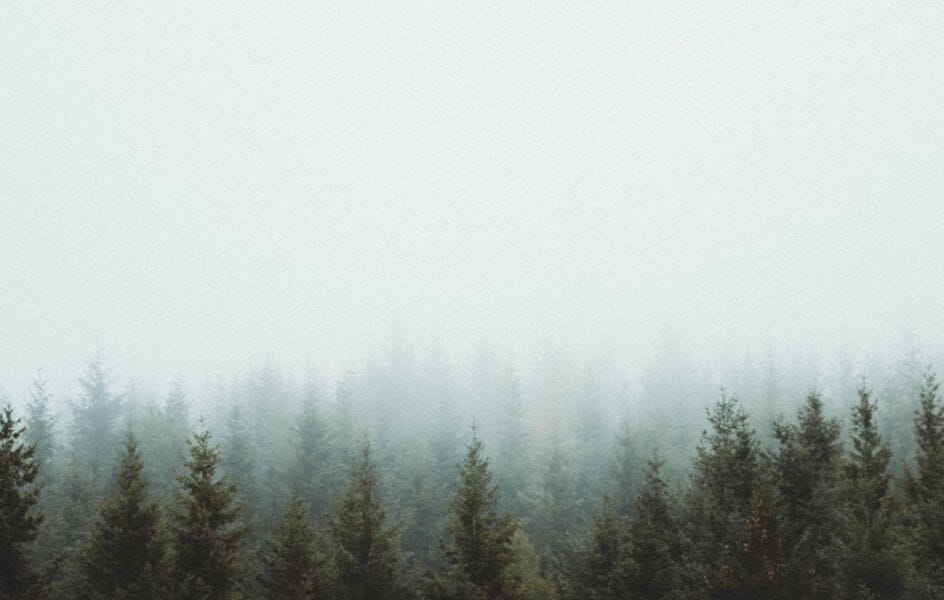
The reasons a young artist or a budding naturalist examines their environs more closely are different, but the sense of awe that unfolds as they start to perceive a vast array of new details is much the same. There is a defining moment when a person perceives that the sky that crowns their every day life cannot really be reproduced, recreated or summarily expressed by that crayon or tube labeled sky blue. It is much the same as the moment another person looks out and realizes that the homogeneous swath of green formerly known as forest, trees or wood is actually a wide and varied community of very different plants, hundreds of them in fact. Learning to pick out the silhouette of the oval crown of a sugar maple from the asymmetrical flounce of a red maple is much the same as learning how to see, mix, then lay down the right yellow-green that will express the airy foliage of a weeping willow. In both cases the nature of each tree, its shape, texture, line, pattern, hue, is considered, its individual identity seen, learned and remembered through juxtaposition.
This certainly makes it possible to learn how to use this tool of comparison effectively from either the artist or the naturalist. Observation and identification are not poetic words and the naturalist might not be able to teach anyone how to mix the right color paint, but in showing someone what makes a cedar not a fir, a naturalist teaches us how to see a slender shape of rust red and to differentiate this shape from that of the triangular cascade of blue-tinged branches that is a spruce. Seeing the shape, the flow, perceiving the ethereal lightness of the narrow leaves and tress-like branches of a weeping willow occurs when looking for the identifying features of that willow.
Similarly the artist, whether a landscape painter or not, knows that a swath of green trees cannot be summarily addressed by squeezing out a glob of viridian green and setting to work. The painter must recognize the juxtaposition of the blue of the spruce-green against the red of the cedar-green, because in order to interpret or translate what is seen into paint, even when the work is not to be strictly representational, individuality must be apparent. If the artist sees a tree, thinks the word green and then grabs that tube of viridian, that person has stopped looking. The outcome of this will be a translation that lacks any real sort of power simply because there is no projection of identity, no life force to that cedar, spruce or willow— the artist is painting the generic word tree.
If, however, an artist decides after placing one thing next to another, seeing the red and blue, choosing one strong shape over another, that a solid swath of viridian green is really how they wish to interpret what they see, then the goals of the naturalist and the artist do diverge. The important thing, however, is that the artist, like the naturalist has collected the information, has visually understood and gone past the word green. In the progression of the artist’s work this is not forgotten. These visual elements identified and acknowledged may never appear on canvas, but they are still an important part of the work.
There are infinite possibilities of color in nature and time spent out in the field for an artist, whether they paint from nature or not, can teach a thorough lesson in the complexities of color. The capacity of the artist to understand this complexity can help the naturalist associate further qualities that help them differentiate one thing from another. Stuck with the words, light green, when trying to key out an unknown specimen, the naturalist, knowing they are surrounded by a sea of very different light greens, senses this gap between language and the visual world but may be unschooled in what to do about it.
Conversely, the artist, trying to understanding the line in nature as opposed to the line man made or learning to see negative space in the shadows of a dense forest floor, can learn these visual lessons from nature on their own but the naturalist can facilitate that understanding by presenting to the artist details inherent in these scenes. The naturalist sees certain shapes and knows that the straight, unbroken line so unusual in nature, stretching far up into the canopy is a tulip tree or that the dark and crooked hawthorn tree bares long spikes creating a scattered and sometimes sinister looking silhouette.
Obviously, for the artist it is not necessary to have this naming of things. But the tangle of form that is the forest becomes more accessible, and understanding the essence of something, to have someone point out the heft and muscle-like twist to the trunk of an ironwood tree offers the artist more ideas about line, texture, motion. Conversely, it might be the artist that illuminates for the naturalist just how very much like the stretch of a human limb this tree can look. The naturalist might have learned to identify this tree by its smallish size, alternate branching, leaf and bud patterns and the smooth gray texture of its bark but never accorded it with a visual identity that produces such a strong and instant recognition. This new perception becomes a lasting tool.
In truth, however, it is not actually important whether these shared aids to perception have specific applications or not. New ways of seeing are invaluable. To be locked into our own habitual pattern of observation limits what we can know, if something is seen in only one manner, in one specialized light, our understanding of it can never expand or evolve. Artist and naturalist have the capacity to enhance each other’s way of arriving at things. Out in the natural world, among the trees, the sticks, the stones, standing amid limitless forms and shapes, textures and colors, lines and patterns, could not be a better place to do this, to learn a new way to see, to gain more information of how things are. It is a fertile spot where the naturalist and the artist can teach each other, exchange concepts of seeing, borrow tools of observation, place in juxtaposition one view of nature with the sense of another, and in that way, discover more of what often lies hidden in our view.