When the Ancient Forest Embraces You

embrace: to hold (someone) closely in one’s arms. From Middle English, encircle, surround, enclose; Old French, embracer, based on Latin ‘in’ ‘arm.’ (English Oxford Living Dictionaries)
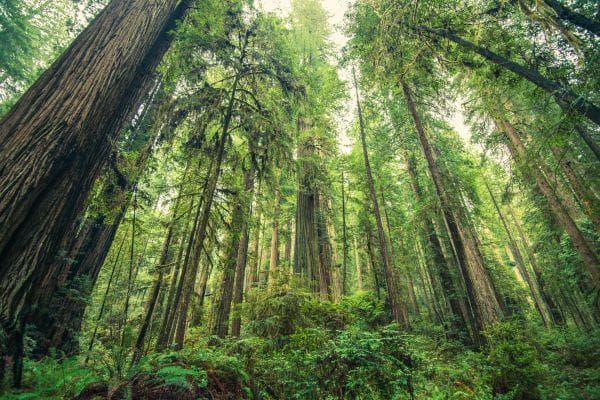
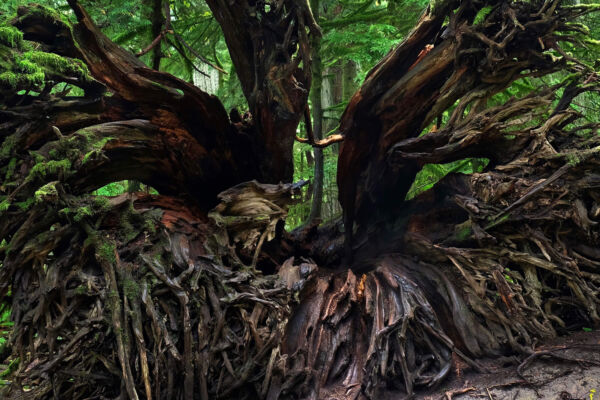
Last week I had a writer’s residency in the 16,000-acre H.J. Andrews Experimental Forest. West of the Oregon Cascades, the Andrews is the most studied forest in North American and perhaps the world. Much of the forest is old growth, and some of it is ancient – between 500 and 700 years old.
Over 100 research projects are ongoing there, many of them so long-term the original researchers won’t live to see the outcomes. Walking through the forest, you’re liable to encounter a team of scientists digging in the soil to find out what it reveals about decades past. Or a massive Douglas Fir wired with sensors and instruments downloading data 24/7, such as leaf wetness and relative humidity. Listening to the forest canopy breathe may help us respond and adapt to climate change.
A fantastic thing about the Andrews Forest, which is supported by Oregon State University and the US Forest Service, is that the scientists and researchers there value partnerships with the those of us in the humanities. The Long-Term Ecological Reflections Program, co-founded by Kathleen Dean Moore, invites writers, photographers, musicians, artists and philosophers to “reflect on the meaning and significance of the ancient forest ecosystem as the forest – and its relation to human culture – evolves over time.”
Continue reading “When the Ancient Forest Embraces You” here.